The Business Startup Checklist: What to Do Before, During, and After Launch
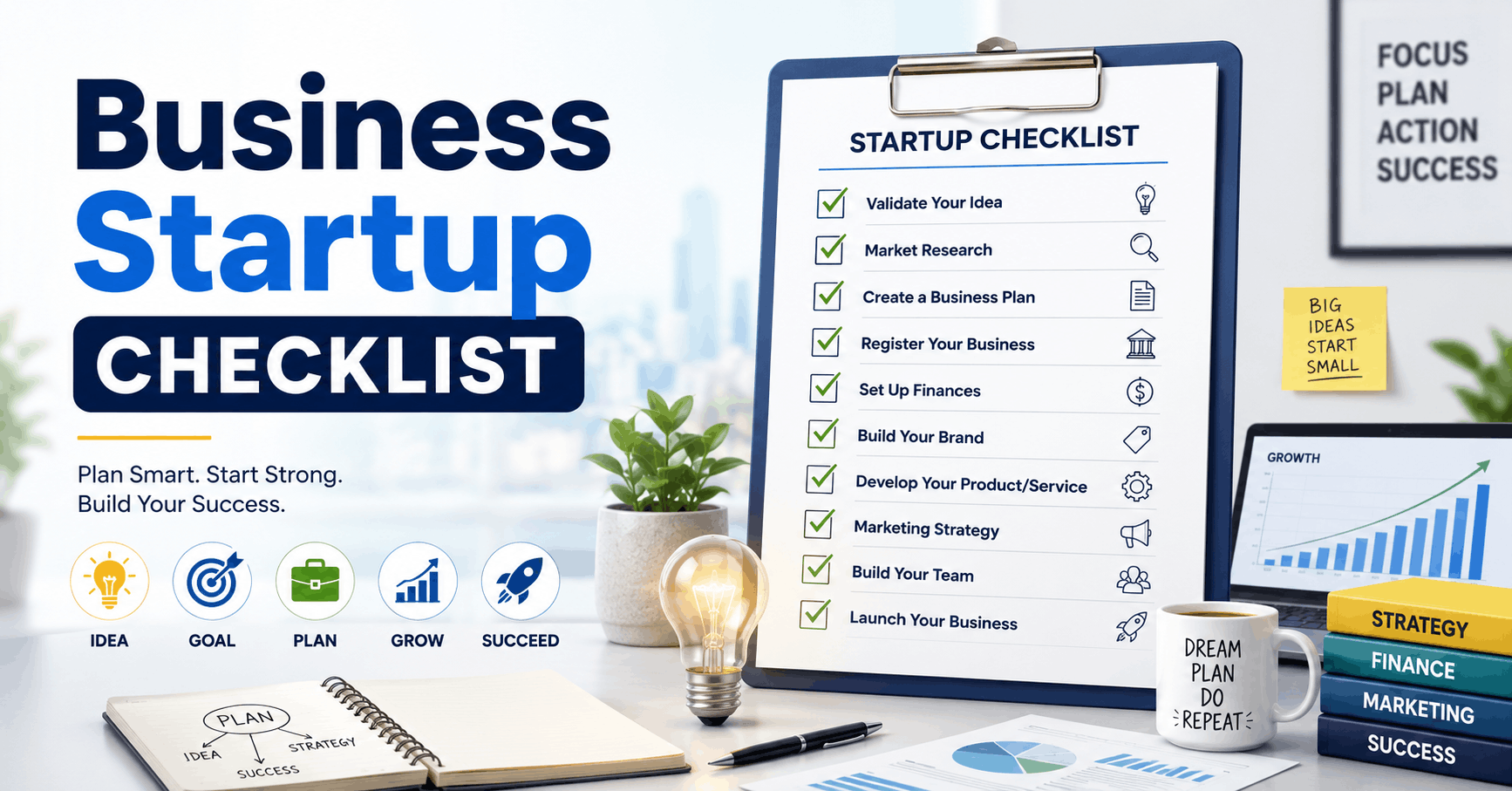
Most businesses don't fail because the idea was bad. They fail because the founder skipped steps that seemed minor at the time and became expensive later. This business startup checklist walks you through every stage in order, from validating your concept to opening your doors, so you're not piecing together what you missed after the fact.
Why a Business Startup Checklist Actually Matters
Starting a business involves dozens of moving parts happening at the same time. You're making legal decisions, financial commitments, branding choices, and operational plans, often without a clear picture of which ones are urgent and which ones can wait. A structured checklist changes that.
The SBA reports that roughly 20% of small businesses fail within their first year, and nearly half don't make it to year five. Poor planning and undercapitalization are the two most commonly cited causes. A checklist doesn't guarantee success, but it does make sure you've addressed the things that sink businesses before they get started. Think of it less as paperwork and more as a pre-flight check. Pilots don't skip it because they've flown before. You shouldn't skip it because you're excited to launch.
The stages below are ordered deliberately. Work through them in sequence rather than jumping ahead to the parts that feel exciting.
Stage 1: Validate Your Business Idea Before Spending Anything
Validation is the step most first-time founders skip because it feels like delay. It isn't. It's the stage where you find out if real people will pay for what you're building, before you've committed money, time, or your reputation to it.
Define Your Customer and the Problem You're Solving
Write down exactly who your customer is in one sentence: their role, their situation, and the specific problem they have. "Small business owners who can't afford a full-time accountant and need monthly bookkeeping under $300" is useful. "Anyone who needs financial help" is not. The more specific your customer definition, the easier every decision after this becomes, from pricing to marketing channels to product features. If you can't describe your customer in one sentence, you're not ready to build for them yet.
Test Demand Before Building
Run at least five to ten conversations with real people in your target customer profile before you build or invest. These aren't sales calls. They're listening sessions. Ask about the problem, not about your solution. Tools like Calendly make it easy to schedule these. If you're building a product, a simple landing page with a waitlist signup (built using Carrd or Webflow in an afternoon) gives you real signal on interest. Pre-selling, even at a discount, is the strongest validation you can get. One paying customer before launch is worth more than 500 email signups.
Stage 2: Legal and Business Structure Checklist
This is the stage people either rush through or avoid entirely. Both are mistakes. Your legal structure affects your taxes, your personal liability, and your ability to bring in investors or partners later.
- Choose your business structure: The four main options are sole proprietorship, partnership, LLC, and corporation. Most small businesses start as an LLC because it separates personal assets from business liabilities without the administrative overhead of a corporation. Consult a business attorney or CPA before deciding, especially if you're planning to raise outside funding, since C-Corps are required for most venture capital deals.
- Register your business name: Check your state's business registry and the USPTO trademark database to make sure your chosen name isn't already taken. Register your DBA (Doing Business As) if you're operating under a name different from your legal entity name. This costs between $10 and $100 in most states.
- Get your EIN: An Employer Identification Number is your business's tax ID. You need it to open a business bank account, hire employees, and file taxes. It's free and takes about five minutes to get from the IRS website at irs.gov.
- Open a dedicated business bank account: Do this before you spend or receive a dollar as a business. Mixing personal and business finances creates accounting problems, complicates your taxes, and can void your LLC's liability protection. Most banks require your EIN and formation documents to open a business account.
- Get the right licenses and permits: Requirements vary by industry and location. The SBA's Business License and Permit tool at sba.gov lists federal, state, and local requirements by business type. Retail businesses typically need a seller's permit. Service businesses in regulated industries (healthcare, legal, financial) need professional licenses. Don't skip this step. Operating without required permits can result in fines or forced closure.
Stage 3: Financial Setup Checklist
Your financial setup determines whether you'll know when you're making money, when you're losing it, and whether you'll have enough cash to stay open while the business grows.
Set Up Your Accounting System
Choose an accounting platform before your first transaction. QuickBooks Online and Xero are the two most widely used small business options. Both connect to your bank account and categorize transactions automatically. FreshBooks is a simpler alternative for freelancers and solo service businesses. Whichever you choose, set up your chart of accounts to match your business model from the start. Retrofitting categories onto 12 months of transactions because you didn't set it up properly is a frustrating and avoidable exercise.
Plan Your Startup Costs and Cash Runway
List every cost you'll incur before your first dollar of revenue comes in. Include registration fees, equipment, software subscriptions, initial inventory, website development, marketing spend, and professional fees. Then estimate your monthly operating costs for the first six months. Divide your available startup capital by your monthly burn rate. That's your runway. The general rule used by most startup advisors is to have at least six months of runway before launch, and to raise or save enough to reach your next meaningful milestone before that runway runs out. If your runway is three months, you'll be fundraising while you're still figuring out the product. That's a hard position to be in.
Separate Tax Obligations From Operating Cash
Set aside a percentage of every payment received for taxes from day one. For most self-employed business owners in the US, 25 to 30% is a reasonable starting estimate covering federal income tax and self-employment tax. Open a separate savings account labeled "Tax Reserve" and transfer that percentage every time revenue comes in. This is more common than most people realize: the number of first-year businesses hit with a large unexpected tax bill is significant, and it's entirely preventable with this one habit.
Stage 4: Brand and Online Presence Checklist
Your brand doesn't need to be perfect before you launch. It does need to be consistent and credible.
- Secure your domain name: Register your .com through Namecheap or Google Domains. If the exact .com isn't available, either choose a different business name or use a modifier (.co, .io) only if you're in a market where those extensions are accepted. A .net or regional extension works fine for local businesses.
- Build a minimal website: You don't need a 20-page site on day one. A homepage, an about page, a services or products page, and a contact page is enough to be credible. WordPress with a clean theme, Webflow, or Squarespace are all reasonable options depending on your technical comfort level.
- Set up Google Business Profile: If you serve local customers or have a physical location, a Google Business Profile is one of the highest-ROI things you can do before launch. It's free, it shows up in local search results, and it lets customers leave reviews. Claim and verify your profile at business.google.com.
- Create one or two social profiles: Choose the platforms where your target customer actually spends time, not where you personally prefer to be. B2B businesses usually get traction on LinkedIn. Consumer products often do better on Instagram or TikTok. Don't create profiles on six platforms and post nowhere. Pick two and be consistent.
- Set up a professional email address: Use your domain ([email protected]), not a Gmail or Yahoo address. Google Workspace starts at $6 per user per month and gives you professional email plus the full Google suite. This is a small cost with a disproportionate effect on perceived credibility.
Stage 5: Operations and Pre-Launch Checklist
Before you start selling, make sure the machinery behind the sale actually works. Nothing damages an early-stage reputation faster than customers who can't pay you, can't reach you, or don't receive what they ordered.
- Set up payment processing: Stripe and Square are the two most common options for online and in-person payments respectively. Both have no monthly fee and charge around 2.9% plus $0.30 per transaction. If you're in a B2B context with larger invoices, wave.com offers free invoicing software with built-in payment processing.
- Write your core contracts or service agreements: For service businesses, you need a signed agreement before you start work. At minimum, it should cover scope, payment terms, revision limits, and what happens if the project changes. You can find attorney-reviewed templates at Docracy or Law Depot for most common business types. Have a lawyer review anything above $10K in value.
- Set up a customer support email or system: Even a dedicated [email protected] address routed to your inbox is enough at the start. Freshdesk has a free tier if you need a ticketing system. The goal is making sure no customer inquiry falls through the cracks during your first weeks of operation.
- Test your entire customer journey before launch: Walk through every step a customer takes from first discovering you to completing a purchase or booking. Do it yourself, then ask someone unfamiliar with your business to do the same. Broken checkout flows, confusing pricing pages, and unanswered contact forms are fixable in an afternoon before launch, and a serious problem after it.
Once you've worked through the operations checklist, you're ready to sell. Not after you've perfected everything, but after you've covered the steps that actually matter. You can also review our guide on how to write a business plan if you're preparing for a loan application or investor conversation alongside your launch.
Common Startup Checklist Mistakes to Avoid
Most of the costly startup mistakes aren't dramatic. They're quiet, boring errors that compound over time.
- Choosing the wrong business structure: Many founders choose a sole proprietorship because it's the path of least resistance, not because it's right for their business. If something goes wrong legally, a sole proprietorship offers zero separation between your personal assets and business liabilities. The LLC formation fee, typically between $50 and $500 depending on your state, is one of the best risk management decisions you'll make in year one.
- Skipping the financial setup until things get busy: Waiting to set up accounting, separate bank accounts, and tax reserves until revenue is flowing is like trying to put on a seatbelt after the accident. The habit of financial discipline is easiest to build when there are only a few transactions to track. By the time you have 200 monthly transactions, retrofitting your system is painful.
- Over-investing in brand before validating demand: A $5,000 logo, a custom website, and a professional photoshoot are wasted if you haven't confirmed that people will pay for what you're selling. Spend the minimum necessary to look credible, then invest in brand once you have paying customers confirming the model works.
Conclusion
Working through a business startup checklist in order keeps you from spending money solving problems that shouldn't exist yet, and from skipping the unglamorous steps that protect you when things go wrong. Start with validation, lock in your legal and financial structure, build a minimal but credible online presence, and test your customer journey before you open your doors. If you're unsure about your legal structure or financial setup, consult a business attorney or CPA before committing. Take a look at our guide to writing a business plan as your logical next step once this checklist is complete.
Frequently Asked Questions
Q: What's the first thing I should do when starting a business?
Validate your idea before spending anything. That means talking to real people in your target customer group and confirming they have the problem you think they have, and that they'd pay to solve it. Most founders skip this step because it feels slow, but it's the one that saves you the most money. Everything after validation, from legal setup to branding, is much easier once you know demand is real.
Q: Do I need an LLC before I start making money?
It's worth forming your LLC before you take on your first paying client, not after. The moment you're exchanging services or products for money, you have business liability. An LLC separates your personal assets from that liability. Formation costs between $50 and $500 in most states, and the process usually takes less than a week. That's a low price for meaningful legal protection from day one.
Q: How much money do I need to start a business?
It depends entirely on the type of business. A freelance service business can be started for under $500. A product business with inventory and manufacturing typically needs $10,000 to $50,000 or more. The number that matters most isn't the startup cost but your runway: how many months of operating expenses you can cover before you need revenue. Six months of runway is the commonly recommended minimum before launch.
Q: Is a business plan required to start a business?
It's not legally required, but if you're applying for a bank loan or SBA financing, you'll almost certainly need one. Beyond funding, a business plan is useful for stress-testing your own model before you've committed real money. A lean one-page plan works for most early-stage businesses. A full 10 to 20 page plan is what banks and investors expect to see when you're asking for capital above a few thousand dollars.
Q: What licenses do I need to start a small business?
Requirements vary by industry, state, and sometimes city. Almost all businesses need a general business license from their local government. Retail businesses need a seller's permit to collect sales tax. Regulated industries like healthcare, legal services, real estate, and finance require professional licenses specific to that field. The SBA's license and permit tool at sba.gov lets you look up requirements by business type and location in a few minutes.
About The Author
System Admin is a veteran contributor to our journal, focusing on deep analysis and factual storytelling across multiple domains.
View all posts by this author