
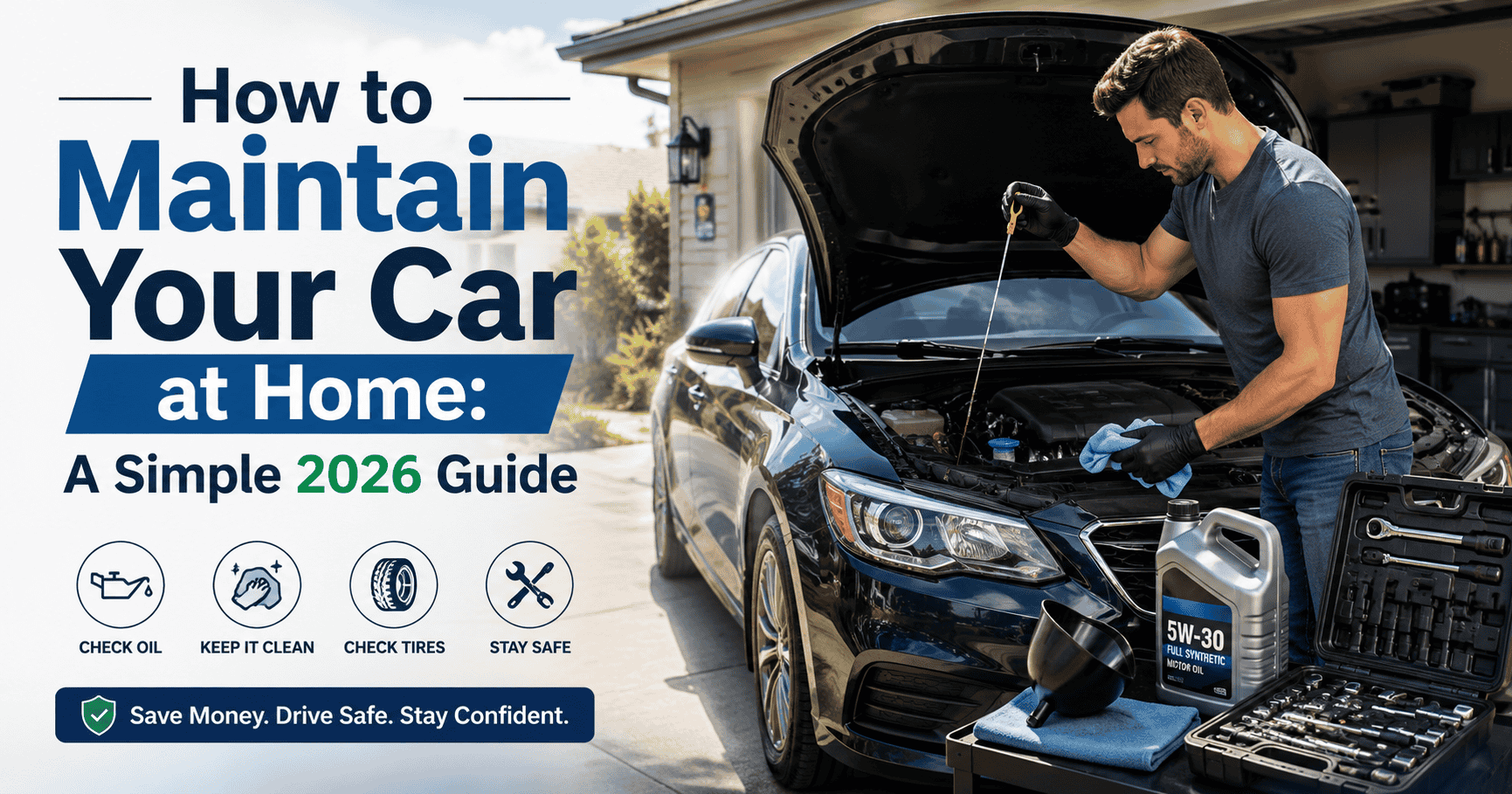
How to Maintain Your Car at Home: A Simple 2026 Guide
Most car problems don’t show up overnight. They build up slowly from skipped oil changes, ignored tire pressure, and a battery nobody’s checked in a year. This guide walks through the maintenance you can actually do at home, what tools you need, and when a job is better left to a mechanic.
Why Home Car Maintenance Matters
A well maintained car isn’t just about avoiding breakdowns. According to the U.S. Bureau of Transportation Statistics, vehicles that receive regular preventive maintenance last significantly longer than those that only get repairs after something fails. Basic upkeep like oil changes, tire rotations, and fluid checks costs a fraction of what engine or transmission repairs run. In practice, most of this work takes under 30 minutes and needs no special training. That’s the part people underestimate.
The Core Maintenance Checklist
You don’t need a garage full of tools to keep your car running well. A handful of checks, done consistently, prevent most of the issues that send people to the shop. Here’s where it gets practical.
Checking and Changing Engine Oil
Most manufacturers recommend an oil change every 5,000 to 7,500 miles for synthetic oil, though this varies by engine type and driving conditions. You’ll need a wrench, an oil filter, a drain pan, and the oil grade listed in your owner’s manual. Pull the dipstick when the engine’s cold. If the oil looks dark brown or gritty rather than amber, it’s time for a change, even if you haven’t hit the mileage marker yet.
Tire Pressure and Tread
Underinflated tires wear unevenly and use more fuel, usually a noticeable amount over a few months of driving. Check pressure monthly using a digital gauge, not the built-in dashboard sensor alone, since those often lag behind real-time changes. The recommended PSI is printed on a sticker inside the driver’s door, not on the tire itself. That distinction trips up a lot of first-time car owners.
Battery and Electrical Checks
Car batteries typically last three to five years, but heat shortens that lifespan faster than cold does. In practice, this means drivers in hot climates should test their battery every six months rather than waiting for a dead start. Look for corrosion around the terminals, a white or greenish crust, and clean it with a mix of baking soda and water if you spot any.
Step-by-Step Monthly Maintenance Routine
You don’t have to do everything every week. Spreading these checks across a monthly rhythm keeps the workload light and the car reliable.
- Check fluid levels: Pop the hood and check oil, coolant, brake fluid, and windshield washer fluid. Top off anything low, and note any fluid that looks cloudy or discolored, since that can signal a leak or contamination.
- Inspect tires: Check pressure cold, before the car has been driven, and look at tread depth using the penny test: insert a penny with Lincoln’s head down, and if you can see all of his head, it’s time to replace the tire.
- Test lights and signals: Walk around the car with the headlights, brake lights, and turn signals on. A burnt-out bulb is a cheap fix but a common reason for failed inspections.
- Listen for new noises: Squealing brakes, clunking over bumps, or a rattling exhaust usually mean something needs attention before it gets worse. Most people ignore this step, and it’s often the one that would’ve caught the problem early.
None of these steps take long once they’re a habit. That said, there’s a catch: some jobs really do need a professional, and knowing the difference saves both money and risk.
Common Mistakes People Make
You’re not alone if you’ve put off one of these tasks longer than you should have. Most people get this wrong because car maintenance isn’t urgent until suddenly it is.
- Skipping the owner’s manual: Every car has different fluid types, tire specs, and service intervals. Using generic advice instead of your manufacturer’s guidance can void warranties or cause premature wear.
- Ignoring the check engine light: A lit check engine light can mean anything from a loose gas cap to a failing sensor. Driving on it for weeks without a scan often turns a $50 fix into a $500 one.
- Using the wrong oil grade: Grabbing whatever oil is cheapest instead of the viscosity your engine calls for can affect fuel economy and long-term engine wear. Stick to what’s printed on the cap or in the manual instead.
Tools Worth Keeping at Home
A basic home maintenance kit doesn’t need to be expensive. Here’s what actually gets used.
| Tool | Typical Cost | Used For |
|---|---|---|
| Digital tire gauge | $8 to $15 | Monthly tire pressure checks |
| OBD-II scanner | $20 to $60 | Reading check engine light codes |
| Oil filter wrench | $10 to $20 | Oil changes |
| Jack and jack stands | $60 to $150 | Tire rotation, undercarriage checks |
These four tools cover most of the routine maintenance in this guide. The good news is it’s a one-time purchase that pays for itself after a single oil change done at home instead of at a shop.
When to Call a Mechanic Instead
Home maintenance covers a lot, but not everything. Brake pad replacement, timing belt service, transmission fluid flushes, and anything involving the suspension or steering system usually call for a trained hand and the right lift equipment. If a job requires disconnecting the battery’s negative terminal for electrical work, or if you’re not confident identifying a part by sight, it’s worth paying for the hour of labor. For safety-related systems specifically, consulting a certified mechanic rather than troubleshooting alone is the safer call.
Conclusion
Keeping up with oil changes, tire checks, and fluid levels at home cuts down on both cost and unexpected breakdowns. Start with the monthly routine above, and keep a simple log of what you’ve checked and when. If you’re ever unsure whether a repair is safe to handle yourself, a quick call to a certified mechanic is worth more than guessing. For more on building out a full home maintenance kit.
Frequently Asked Questions
Q: How often should I check my car at home?
A monthly check of tires, fluids, and lights covers most issues before they become serious. Oil changes follow your manufacturer’s mileage interval, usually every 5,000 to 7,500 miles for synthetic oil.
Q: Can I really change my own oil without a garage?
Yes, as long as you have a flat surface, a drain pan, and a way to safely lift the car if needed. It takes most people 20 to 30 minutes once they’ve done it a couple of times.
Q: What’s the most commonly skipped maintenance task?
Tire pressure checks get skipped the most, mostly because dashboard warning lights only trigger once pressure is already low. Check it manually with a gauge once a month to catch it earlier.
Q: Is it worth buying an OBD-II scanner for home use?
For $20 to $60, yes. It tells you exactly what triggered the check engine light instead of guessing, and can save a diagnostic fee at the shop for simple issues like a loose gas cap.
Q: What car maintenance should never be done at home?
Brake system work, timing belt replacement, and anything involving airbags or suspension components need proper equipment and training. These are the jobs where a mistake affects your safety, so a certified mechanic is the right call.